Reusable bags in restrooms save CO₂e
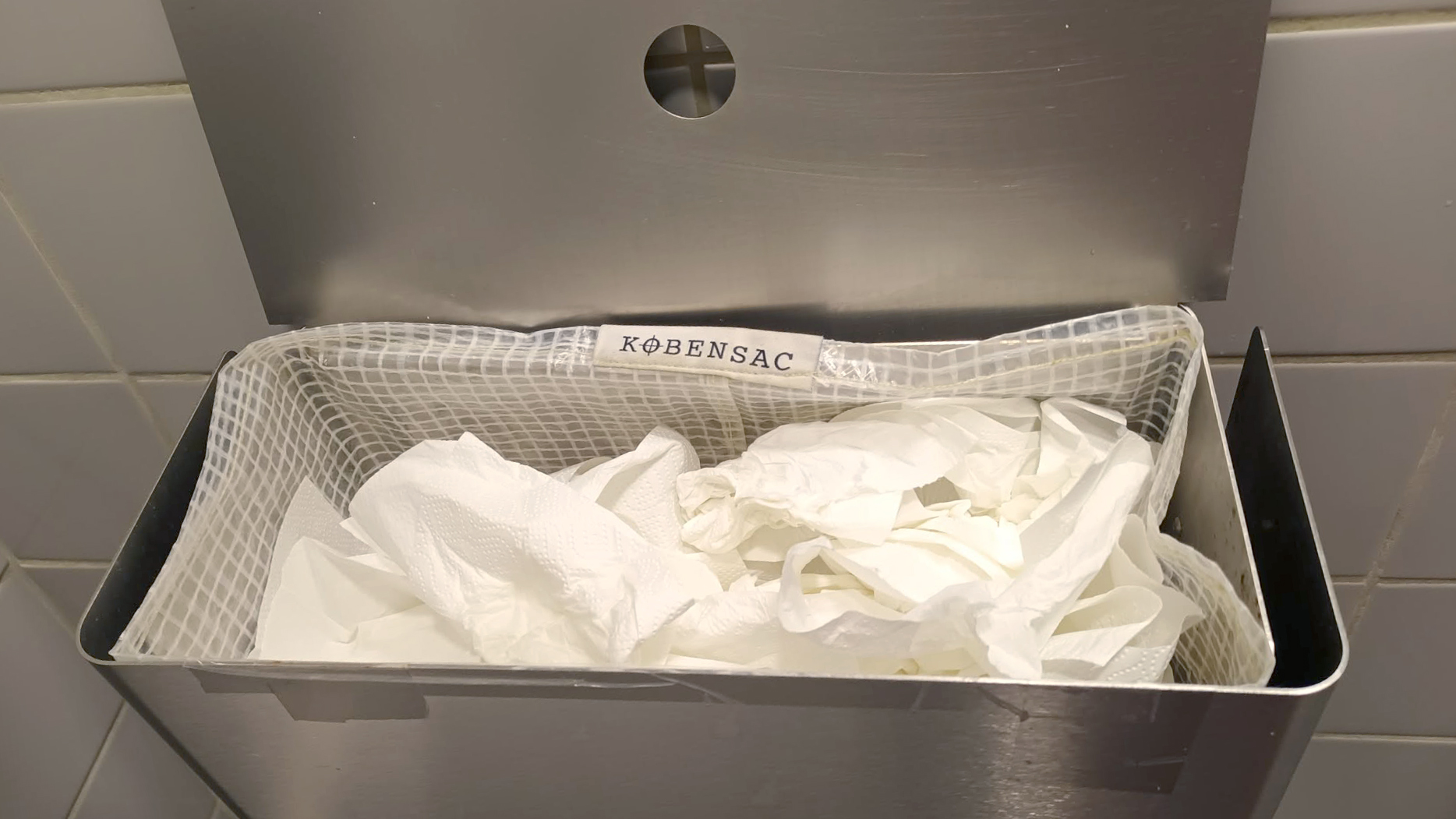
16 tonnes of CO₂e per year. That is how much DTU save through the simple action of replacing disposable waste bags for paper towels in restrooms with reusable bags.
DTU Serviceportal

Do you have questions? Ask a question in the DTU Service Portal
The change has been implemented across DTU’s campuses in Lyngby, Ballerup, Hirtshals, and at Risø. The former disposable bags for paper towels in restrooms have been replaced with reusable bags from Kobensac, made from worn‑out construction tarpaulins that would otherwise have been sent to landfill or incineration. The bags are produced locally with a strong focus on social responsibility.
Reduced climate footprint
According to calculations by Kobensac, each reusable bag reduces the need for disposable bags by the equivalent of 5.4 kg CO₂e per year. With approximately 3,000 waste bins in DTU’s restrooms, this corresponds to a total annual reduction of about 780,000 disposable bags, or roughly 16 tonnes of CO₂e. The calculation also takes into account the limited CO₂e emissions from the production and eventual disposal of the reusable bags.
A long‑lasting solution
As Kobensac’s bags are a relatively new product, there is some uncertainty about how long they will withstand repeated use. However, Kobensac reports that their other customers have not experienced bags wearing out during the five years the product has been on the market.
The reusable bags from Kobensac are more expensive to purchase than disposable bags. In return, they reduce ongoing costs for purchasing disposable bags. Any financial savings are therefore achieved over the long term, while the climate and resource benefits are realized from day one.
The introduction of reusable bags in DTU’s restrooms is part of DTU’s broader efforts to minimize resource consumption in university operations.