Machines and ergonomics
Workshop ergonomics is about adapting the work environment, tools and working methods to suit the body and minimise the risk of injuries and strain injuries. This is achieved by designing the workplace with appropriate furnishings, such as adjustable tables and support floors, and by ensuring correct technique when lifting, standing and sitting to improve well-being and efficiency.
Machinery
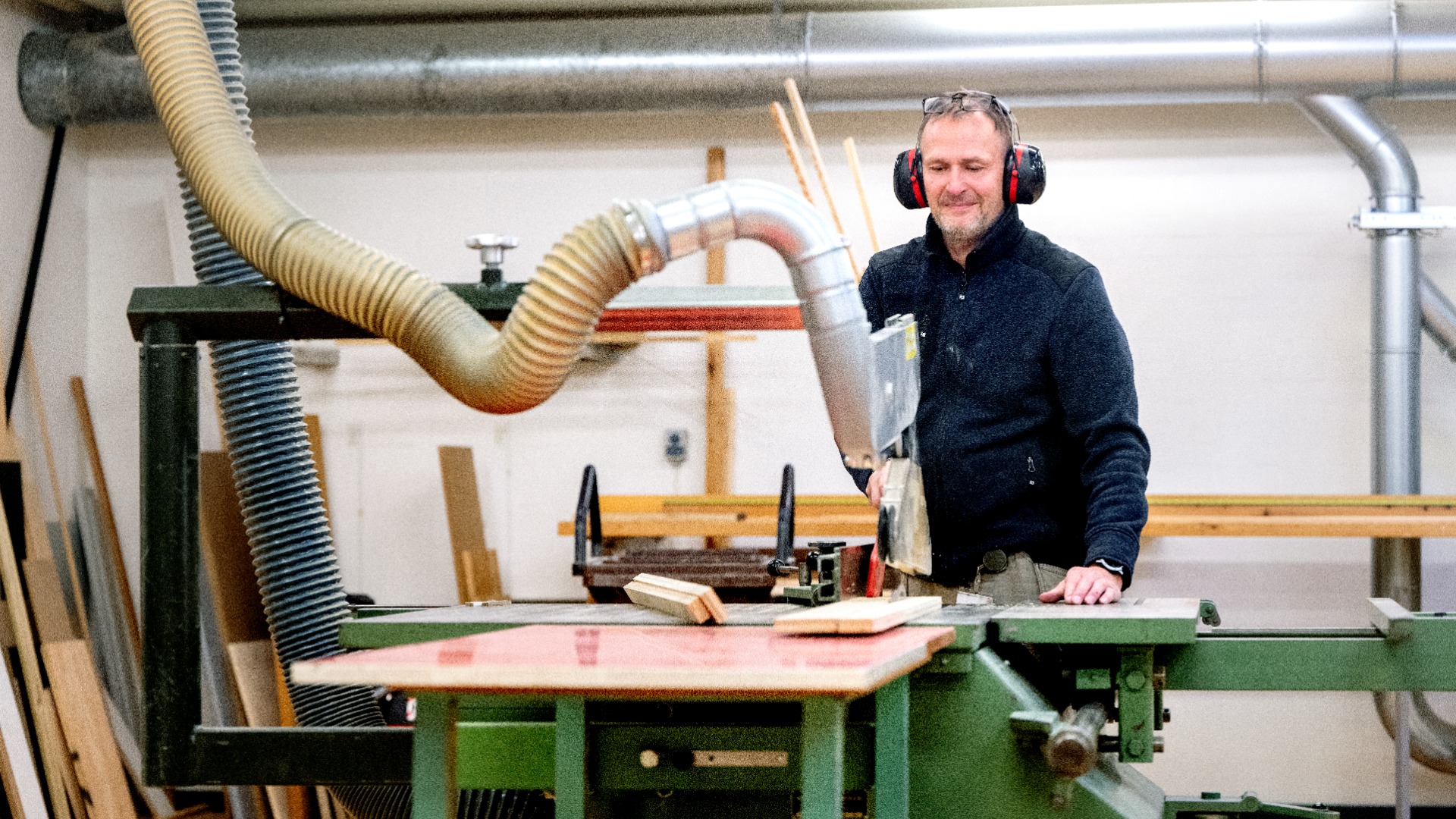
In the past, people designed machines based around their purpose, without much thought for the people operating them. Fortunately, today, the machine directive contains general requirements on ergonomics in connection with machine operation:
1.1.6. Ergonomics
Under the intended conditions of use, the discomfort, fatigue, and physical and psychological stress faced by the operator must be minimized as much as possible, taking into account ergonomic principles such as:
- allowing for differences in the physical size, strength, and stamina of operators
- providing sufficient space for operators to move all parts of their body
- avoiding a machine-determined work rate
- avoiding monitoring that requires lengthy concentration
- adapting the man/machinery interface to the foreseeable characteristics of the operators
1.2.2. Control devices
Control devices must be so arranged so that their layout, travel, and resistance to operation are compatible with the action to be performed, taking account of ergonomic principles.
Danish executive order no. 1109 on ‘the use of technological aids’ stipulates:
Section 5.3. When fulfilling the applicable requirements relating to the use of a technological aid, full consideration must be given to the workplace in question and the working position during use, as well as other ergonomic factors.
Do you need help?
If you need ergonomic advice in relation to your workstation, please contact your local ergonomics ambassador, see below.
Contact
Ann-Rose Bøttcher Sport and Health Coordinator Campus Service Mobile: +45 40604928 arbot@dtu.dk