Consumption and safety at events
Attention to resource efficiency in planning can make events, such as large meetings, conferences, celebrations and exams, more sustainable. In addition, your choices can make a statement about sustainability.

Do you have any questions? Ask a question in the DTU Service Portal or create a support case
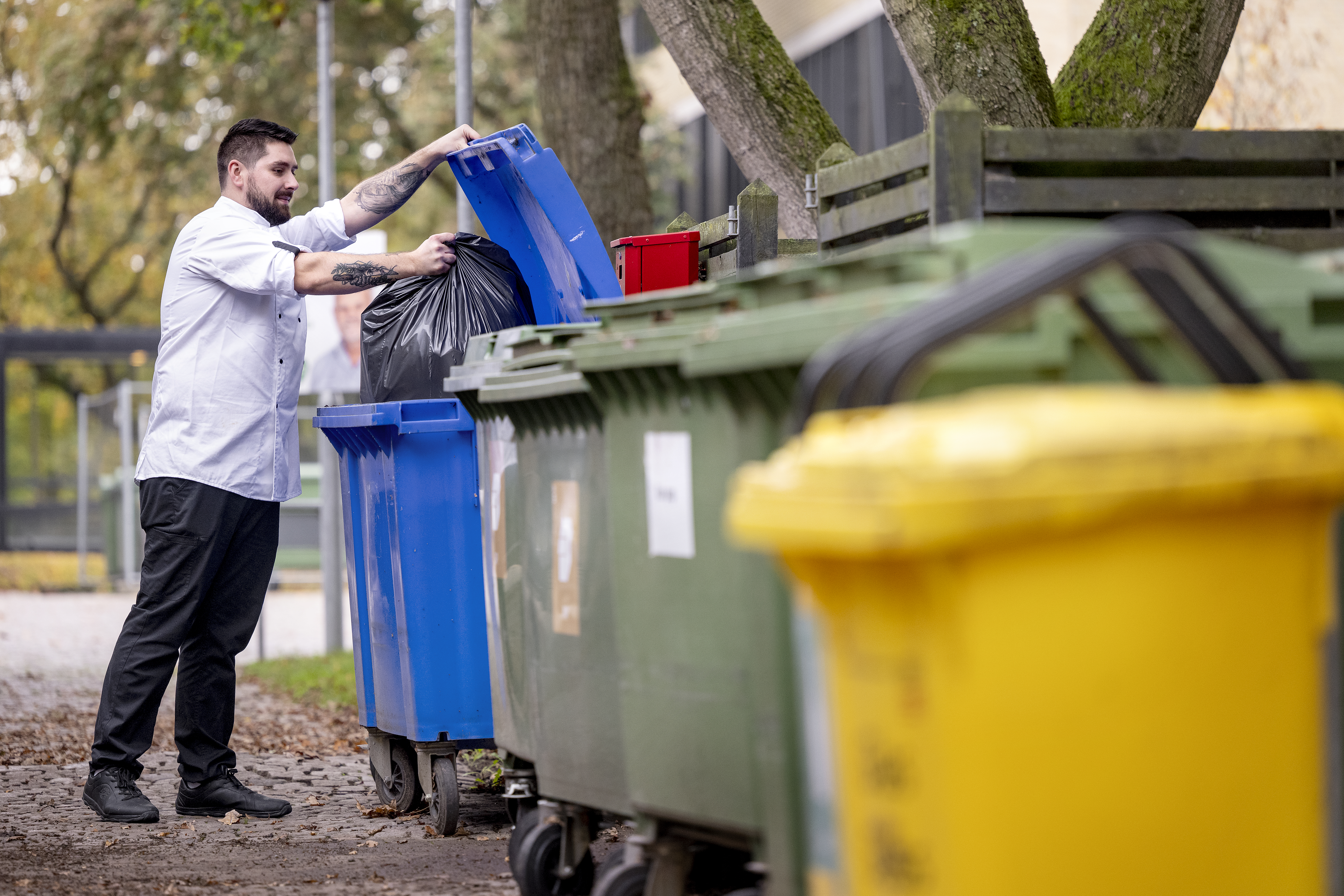
Reduce and separate waste
As the event organiser you are responsible that participants can sort their waste and that arrangements are made to ensure extra capacity and collection. CAS can help with extra recycling bins and signage.
Consider how you can reduce waste amounts
- Avoid unnecessary paper consumption.
- Reduce single use products such as tableware. DTU's catering use reusable cups.
- Reduce food waste through planning. Make sure to get a precise participant count (e.g. by sending reminders to invitees), and notify the supplier when there is still time to adjust the quantity.
- Make signs, name tags and other materials reusable.
Consider what types of waste the event will generate
- Is food being served?
- Are you handing out printed materials or drawing on flip charts?
- Will there be products arriving packed in boxes?
- Do you expect the event to generate other waste types?
Planning
- Place the recycling bins close to the waste source
- Contact CAS at least one week before the event to order extra outdoor bins. Please let us know the time and size of the event and the waste types expected.
Communication
- Consider the need for extra communication. You can inform participants about the recycling systems when giving other practical information.
- Make sure that staff know how to sort waste so that they can help participants.
Prevent fire
Please consider fire safety when planning your event.
Large events require special safety measures. If your event has more than 149 participants you must have a space distribution plan, approved by a certified fire advisor. Further, you must assign a safety official, to ensure that the event proceeds safely. CAS Servicecenter can help find existing space distribution plans for campus locations, and elaborate on the role of the safety official.
Choose greener catering
The choice of food and drinks for your event have the potential to reduce the environmental footprint.
- Reduce meat consumption by choosing vegetarian or vegan opportunities from DTU's catering
- Reduce food waste through planning. Make sure to get a precise participant count (e.g. by sending reminders to invitees), and notify the supplier when there is still time to adjust the quantity. You can change your order from DTU's canteens until noon the day before.
Gifts, prizes and decorations
Consider materials, working conditions, transport, quality and other sustainability aspects in your choices of gifts, prizes and decorations.
When choosing gifts and prizes
- Consider which item can create real value for the receiver
- Follow the lables. E.g. the organic "Ø" label, the swan label, Fairtrade or the EU ecolabel (the flower).
- Choose organically or locally sourced, if you want to give flowers.
- Give an experience. Often this means less resource consumption.
- Give a voucher, membership, subscription or donation. E.g. a membership of DTU Sport or a voucher for DTU's bookshop.
- Give an edible treat. Everyone likes an organic or local treat.
- Consider the wrapping. Choose gift wrapping that can be reused or recycled. Traditional gift wrapping cannot be recycled and must go to residual waste.
When choosing decorations
- Choose decorations that can be reused, e.g. table cloths or flags made of fabric.
- Avoid writing date and year on sign, roll ups and other materials
- Avoid cut flowers for decorations. Choose potted plants or decorations found in nature.